Patient education example
Lorazepam patient education includes short-term use, avoiding alcohol, and not stopping suddenly after regular use.
Patient education, included
Find patient education alongside the clinical information for a medication.
 Psych Med Atlas
Get the map
ExplorePsychiatric medications, mapped for reference
An interactive psychiatric medication reference for clinicians and trainees. Explore drug classes and key information to prepare for more informed conversations.
$29Psychiatric Medication Map · Interactive map access
Explore lorazepam indications, mechanism, side effects and interactions.

Use the map to explore psychiatric medication classes, from antidepressants and mood stabilizers to ADHD and sleep medications.
Review a medication's indications, mechanism and dosing alongside its key side effects and important interactions.
Use the patient education information to review counseling points alongside the medication's risks and interactions.
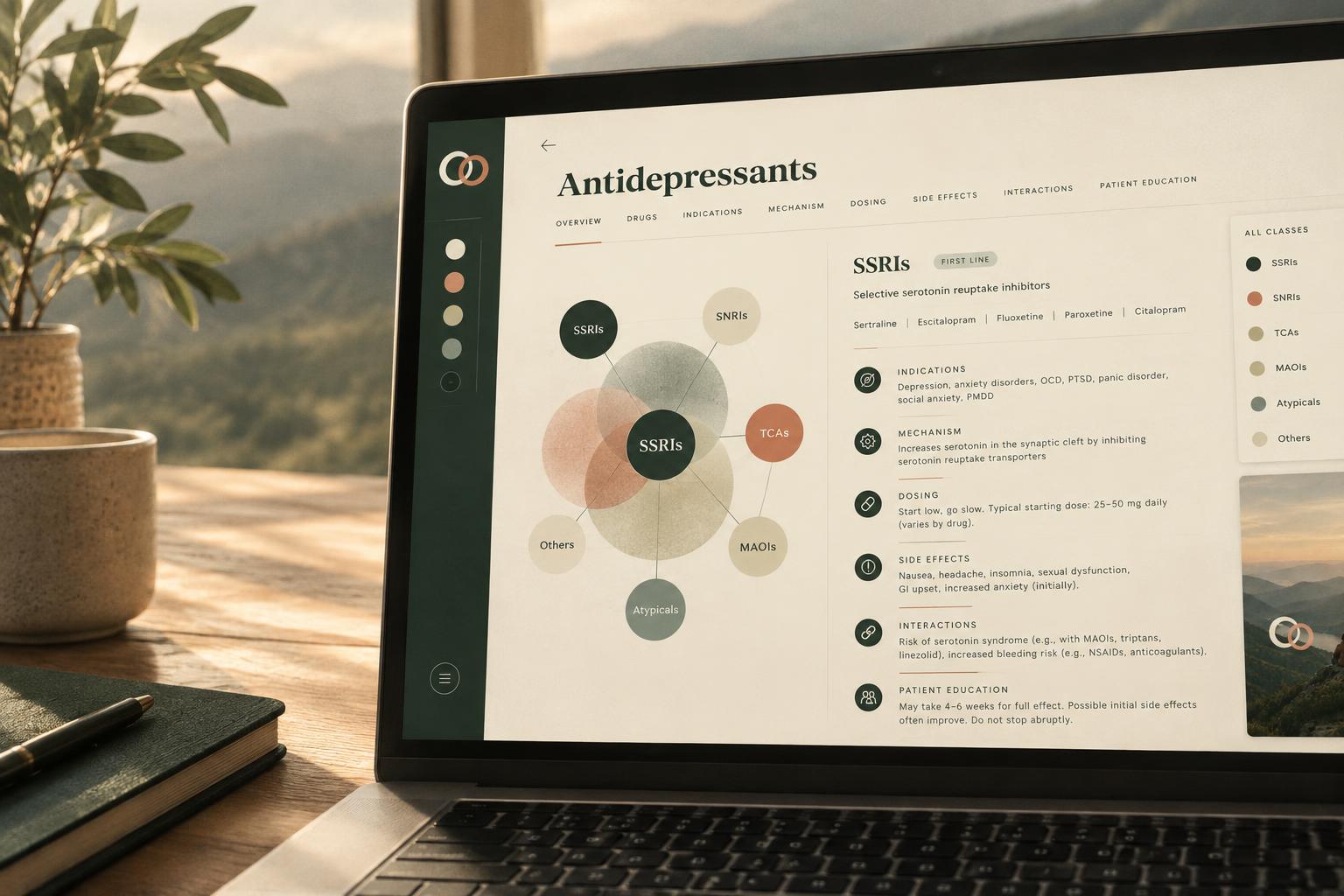
Connected reference
Explore drugs alongside their indications, mechanisms, dosing, side effects, interactions and patient education.
Explore insidePatient education example
Lorazepam patient education includes short-term use, avoiding alcohol, and not stopping suddenly after regular use.
Find patient education alongside the clinical information for a medication.
Explore the map
Move from medication classes to drugs and their key reference information.
Explore antidepressants, mood stabilizers, atypical antipsychotics, ADHD medications, benzodiazepines, sleep medications and alpha agonists.
Review how medications work and their dosing information within the reference.
Read key side effects and important interactions alongside each drug's other reference details.
Reference examples
Sample lorazepam entries show how key drug information is organized within the map.
Lorazepam indications include acute anxiety, agitation and catatonia, as well as alcohol withdrawal with liver disease.
Lorazepam's mechanism of action is positive allosteric modulation of GABA-A, as described in the medication reference.
Lorazepam: do not stop suddenly after regular use.
Key lorazepam side effects include sedation, ataxia, memory impairment, falls, dependence and respiratory depression.
Important lorazepam interactions include opioids, which carry a boxed warning, alcohol and other central nervous system depressants.
Questions
A closer look at the map, its contents and who it is for.
The interactive reference is for psychiatric clinicians and trainees.
Access to an interactive map covering medication classes, drugs, indications, mechanisms, dosing, side effects, interactions and patient education.
The map includes SSRIs, SNRIs, atypical antidepressants, mood stabilizers, atypical antipsychotics, stimulant and non-stimulant ADHD medications, benzodiazepines, sleep medications and alpha agonists.
Yes. Patient education appears alongside the drug information, including counseling points such as the lorazepam guidance on short-term use and not stopping suddenly after regular use.
Yes. The map covers key side effects and important interactions as part of its medication reference information.
Psych Med Atlas is run by Michael.
Explore psychiatric medication classes and the key details behind each drug, in one interactive reference.